Field Noteswritten for this archive, November 12, 2026
Early Reading First: what the preschool grants taught
Between 2004 and 2008 the Literacy Institute won three federal Early Reading First grants for Richmond preschools: RERF with VCU Head Start, then PEELLS, then SEELLS with Richmond Public Schools. The overview page notes, with some pride, that these were the only Early Reading First awards ever made in Virginia, and that only one other organization in the country held three.
The program itself is gone. Its funding ended around 2010, when the federal budget folded Early Reading First into the Striving Readers literacy program. What it left behind is a large national evaluation and a decade of classroom experience, both of which still say something useful to teachers and parents.
What Early Reading First tried to do
The program came out of the No Child Left Behind Act of 2001, as the preschool sibling of Reading First. Grants went to existing programs, Head Start centers, public pre-K and community child care, that served mostly low-income children; the eight Richmond centers of 2007 are listed on the RERF sites page. The grants paid for three things:
- Coaching for teachers, usually a literacy coach visiting classrooms every week;
- A research-based curriculum and materials focused on early language and literacy;
- Screening and progress monitoring, so that children falling behind were spotted early.
The 2008 SEELLS announcement lists the four target skills that appear in nearly every grant: oral language, phonological awareness, print awareness and alphabet knowledge. The RERF goals add the family side, training parents in reading strategies to use at home.
What the national evaluation found
In Richmond the grants were led by VCU faculty, with Joan Rhodes and Evelyn Reed-Victor as co-principal investigators and Christopher Chin as evaluator (see Affiliated Faculty and the RERF staff list). Nationally, in 2007 the Institute of Education Sciences published the final report of the national evaluation of Early Reading First, led by Russell Jackson. It used a regression discontinuity design, comparing 28 funded sites with 37 sites that applied in the same round but were not funded, with data on four-year-olds from the 2004–05 school year. Teachers in funded programs received up to 48 more hours of professional development a year.
The results were mixed in a way that turned out to be instructive.
| Area | Finding |
|---|---|
| Print and letter knowledge | Positive, statistically significant impact |
| Classroom practice (language and literacy environment, teacher behaviors) | Positive impact |
| Phonological awareness | No significant impact |
| Oral language (vocabulary, listening comprehension) | No significant impact |
In other words, the grants reliably taught letters and print concepts, which are concrete, countable and easy to drill. They did much less for the two skills that take longer to build and matter a great deal for later reading comprehension: hearing the sounds inside words, and knowing lots of words and how to use them.
Why vocabulary is the hard part
Letter names are a closed set. There are twenty-six of them, and a child who knows them all is done. Vocabulary is open-ended. A child entering kindergarten with a rich vocabulary has heard many thousands more words in conversation than a child with a sparse one, and no curriculum unit can make that up in a year.
The 2008 report of the National Early Literacy Panel, Developing Early Literacy, which reviewed hundreds of studies, came to a matching conclusion from a different direction. Alphabet knowledge, phonological awareness, rapid naming, writing one’s name and phonological memory predicted later reading well; the panel called a predictor strong when its average correlation with later literacy reached about .50. Oral language mattered too, especially for comprehension, but it was best supported by sustained, back-and-forth conversation and shared reading, not by short lessons.
That is the lesson teachers took from the Early Reading First years: the cheapest and most powerful tool is talk. Lots of it, with adults who ask real questions and wait for real answers.
Dialogic reading, briefly
The best-studied way to turn a picture book into talk is dialogic reading, developed by Grover Whitehurst and colleagues at Stony Brook in the late 1980s. The idea is that the adult gradually hands the storytelling over to the child.
The basic move has four steps, often remembered as PEER:
- Prompt the child to say something about the book.
- Evaluate the answer.
- Expand it by rephrasing and adding a little.
- Repeat the prompt so the child can try the fuller version.
The prompts themselves come in five kinds, remembered as CROWD:
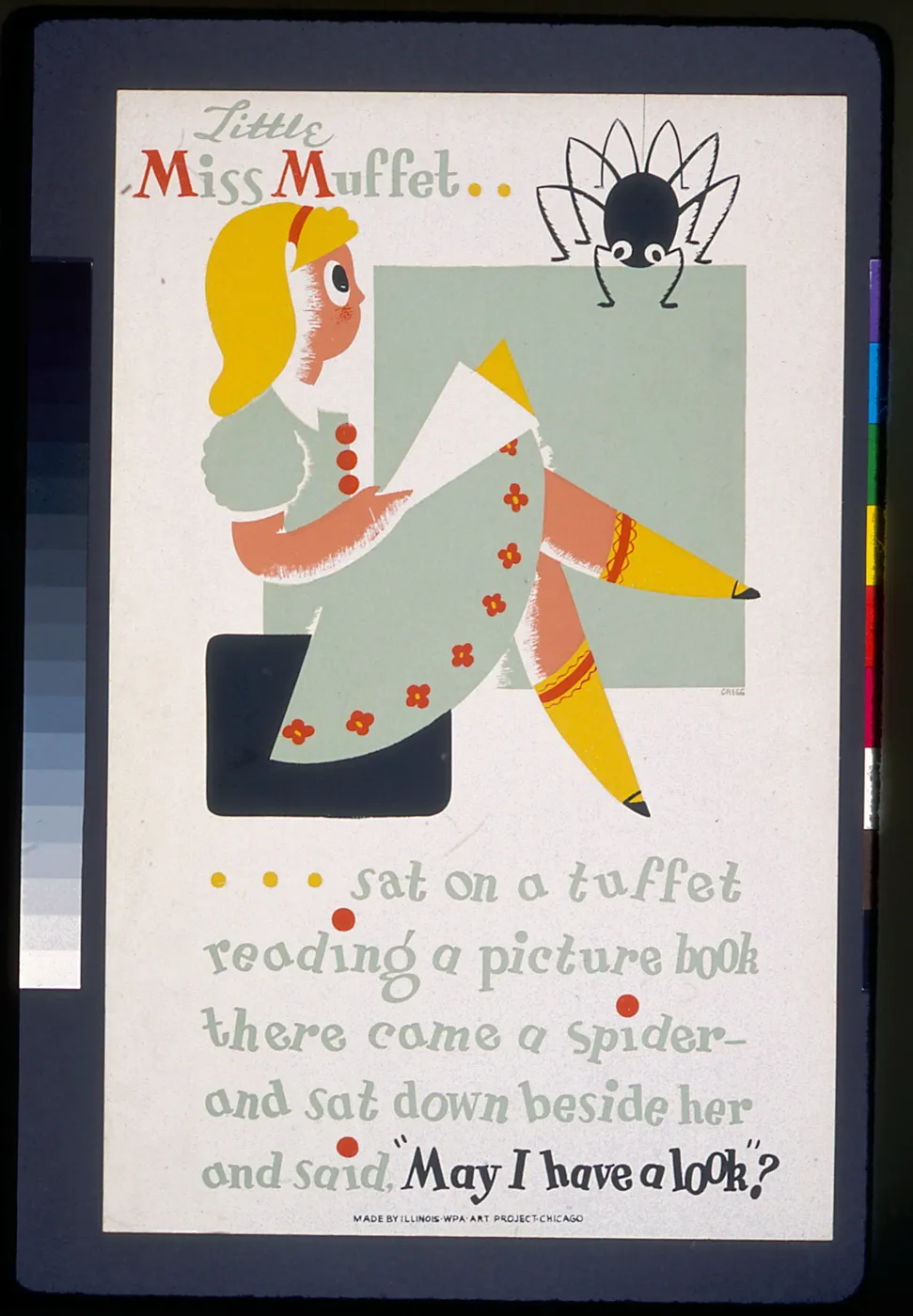
- Completion: leave a blank at the end of a rhyming line. (“Little Miss Muffet sat on a…”)
- Recall: ask what happened. (“What did the spider do?”)
- Open-ended: ask about a picture. (“Tell me what’s happening on this page.”)
- Wh- questions: who, what, where, why. (“Why did she run away?”)
- Distancing: connect the book to the child’s life. (“Have you ever been surprised by a bug?”)
None of this needs special books. It does need an adult who is willing to slow down and let a three-year-old take a long time to answer.
What families can do
The family events the Institute ran, like the evening at the Children’s Museum of Richmond where 180 people listened to Mem Fox’s The Magic Hat and made their own hats, were built on a simple premise, the same one behind adult family literacy work (see Adult literacy in Virginia, then and now): parents are a child’s first teachers, and they need ideas more than materials. Public libraries have since packaged the same message as Every Child Ready to Read, a program of the American Library Association’s public library division. Its second edition, from 2011, replaced a list of six early literacy skills with five practices, and a digital edition followed in May 2024. The five practices:
- Talking. Narrate what you are doing, name things, ask questions and follow your child’s interests. Use your home language; strong talk in any language builds the base for reading in English.
- Singing. Songs slow words down and split them into syllables, which builds phonological awareness without anyone calling it that.
- Reading. Every day, even for ten minutes. Let the child choose, reread favorites, and use the CROWD prompts.
- Writing. Scribbling counts. Let children “write” shopping lists, sign their name to cards, and see adults writing for real reasons.
- Playing. Pretend play, a toy kitchen or a pretend shop, is where children practise the language of stories and explanations.
What schools kept
Several features of the Early Reading First model are now normal in good preschools: instructional coaching rather than one-off workshops, short screening of every child two or three times a year, and deliberate attention to letters and sounds in a playful way. The evaluation’s weak spots shaped the next generation of programs too. Newer curricula put far more weight on extended conversation, rich read-alouds and vocabulary taught in themes.
In Richmond, the Institute’s grants were followed by ExCELL, the early literacy program on the 2013 staff list, with coaches, family specialists and an evaluation team, and with community partners in the Richmond Public Library and Richmond Public Schools. Its co-directors, Barbara Gibson and Cynthia Hutchinson, had both worked on the earlier grants. The people names in those rosters are a reminder that the real work of a grant like this was done in classrooms, one coaching visit at a time.
Sources named in this note
- Russell Jackson and others, National Evaluation of Early Reading First: Final Report (NCEE 2007-4007), Institute of Education Sciences, U.S. Department of Education, 2007.
- National Early Literacy Panel, Developing Early Literacy, National Institute for Literacy, 2008.
- Grover J. Whitehurst and colleagues, “Accelerating language development through picture book reading,” Developmental Psychology, 1988.
- American Library Association, Public Library Association and Association for Library Service to Children, Every Child Ready to Read, second edition.
- The Institute’s overview, RERF pages and 2008 press release.
Questions readers ask
What was Early Reading First?
A federal grant program created under the No Child Left Behind Act of 2001. It paid for existing preschool programs serving mostly low-income children to become centers of excellence in early language and literacy, through teacher coaching, research-based curricula and regular assessment.
Did Early Reading First work?
Partly. The national evaluation published in 2007 found that it improved children's print and letter knowledge and changed classroom practice, but it found no significant effect on phonological awareness or oral language.
What is dialogic reading?
A way of reading picture books with young children in which the adult asks questions and expands on the child's answers, so that the child gradually does more of the telling. It was developed by Grover Whitehurst and colleagues and is one of the best-studied ways to build preschool vocabulary.
What can parents do at home without special materials?
Talk a lot and listen to the answers, read together every day, sing and rhyme, let children scribble and write their names, and play. Libraries call these the five practices of Every Child Ready to Read.